8
min read
According to recent studies, more than 78% of small and medium-sized businesses (SMBs) have already implemented artificial intelligence in at least one business function in 2025. This is a 43% increase compared to two years ago.
The impact of these changes is felt quickly: 87% of entrepreneurs report an improved ability to scale operations, while 86% note an increase in business profitability. Still questioning the feasibility of technological shifts? Read on – this article discusses why businesses should automate now and how entrepreneurs can avoid wasting money.

Automation: A competitive necessity, not a trend
In 2026, business process automation is no longer just a fad; it has become a necessity for survival and competitiveness. This is especially relevant for small and medium-sized enterprises. To compete with larger companies, they must work more productively, yet they simply lack the resources to hire large numbers of people or support inefficient processes.
How does this work in practice? Let's look at an example. The American company Omega Healthcare Management Services has been managing the financial flows of its clients – leading players in the healthcare sector – for over 10 years. A few years ago, they began using an AI tool to handle administrative routines. As a result, they accelerated document processing and handling (by 40% and 50%, respectively) and saved 15,000 work hours per month.
Simply "Buying an App" is not enough
Tools without process changes do not yield results, which is why AI investments often fail to pay off. Unfortunately, artificial intelligence is not a magic pill. Therefore, you should start by developing clear regulations, distributing roles, and creating well-thought-out logic for task execution.
The correctness of this thinking is once again proven by a real-world example. Hershey implemented a new ERP system to automate supply and order processes. However, due to insufficient process preparation and incorrect planning, the system failed to function properly during peak load periods. Consequently, Hershey lost over $100 million.
AI must work alongside automation
Artificial intelligence alone will not ensure efficiency. For AI to bring real benefits, it must be integrated into already automated business processes. Technology without automation is simply an additional expense that doesn't deliver the desired results.
If this point is ignored, there is a risk of repeating the mistake made by the managers of the Lidl supermarket chain. They invested over €500 million in technology but did not pay enough attention to the specifics and automation of internal processes. Because of this, the project was halted, and the money was wasted.
Custom development is not always necessary
Implementing automation doesn't always require expensive custom solutions. Sometimes, combining ready-made systems and integrations is enough to achieve the goal. The key is to choose a platform that best meets your business needs.
This approach truly works. The Swiss insurance company Swiss Re successfully implemented UiPath RPA solutions for a wide range of internal tasks, including working with bank accounts. In total, over 100 processes were automated, increasing their efficiency by 80% and saving 65 FTE (Full-Time Equivalent) work hours annually.
Less hype – more business logic
Automation and digitalization are not just trends; they are a vital part of a strategy for achieving competitive advantages. Tools should work to solve real business problems rather than just being another trendy "gadget".
This approach allows for real benefits, including:
Increased operational efficiency: You can perform routine tasks much faster, making teams more productive.
Reduced operating costs: Automation helps optimize labor costs, reduce errors, and distribute resources more efficiently.
Improved quality and accuracy: Automated systems reduce the impact of the human factor on production processes. This, in turn, helps improve work quality and minimize mistakes.
Faster service speed: Automation allows for reduced customer service time, which positively impacts satisfaction and loyalty.
Increased sales and average order value: Automated processes can contribute to revenue growth. For example, by applying technology to create personalized offers or cross-sales.
Automation and artificial intelligence are tools that truly work, but only under the condition of proper use. Through their implementation, companies demonstrate increased efficiency, cost reduction, improved user experience, and revenue growth.
How to avoid wasting money?
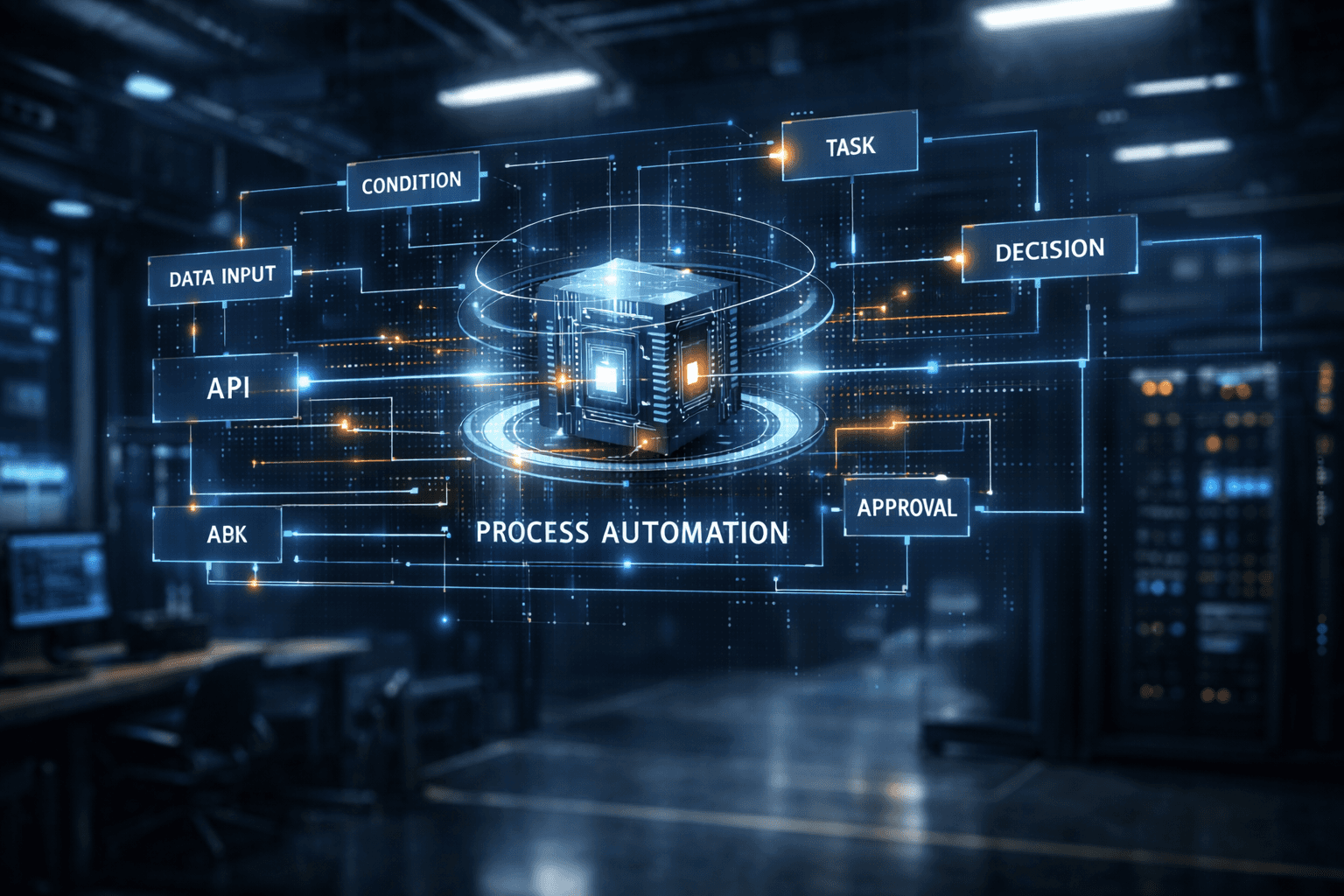
Many companies approach automation haphazardly. They are lured by the next popular tool, the hype around AI, and loud promises to "improve everything in a week". But the truth is, automation isn't magic. It is systematic work that requires a clear plan and understanding of processes.
Below are the practical steps you should start with to ensure success:
Map your processes: Before automating anything, check how that "something" works now. This analysis will help identify bottlenecks, repetitive tasks, and real moments where time and resources are wasted.
Identify loss points: Look for where processes slow down. This could be unnecessary manual actions, errors due to the human factor, or delays in communication or data processing. This is where automation is most appropriate.
Analyze the data: AI solutions only work where there are clear rules and structured data. If a problem requires intuition to solve, automation is powerless at that stage.
Choose the tool type: SaaS or Custom Solution: SaaS platforms are suitable for standard processes like sales, finance, and customer support. They are quick to implement and cheaper. For unique and strategically important tasks, customized development is preferable. Such software is adapted to your specific features, though it requires more time and resources.
Start gradually with KPIs: Define exactly what you want: to improve processing time, increase productivity, or reduce errors. Start with small process blocks, measure the effect, adjust the approach, and only then scale up.
Proper automation doesn't start with a tool. It should start with an understanding of internal processes and real business value. This way, technology becomes a real helper rather than a source of problems and unnecessary expenses